THIS WEBSITE USES COOKIES
We use cookies to personalise content, to provide social media features, and to analyse our traffic. By choosing 'allow all cookies', you consent to our cookies.
To find out more, read our privacy policy and cookie policy.
Socioeconomic assessment of the potential deployment
Choice experiment to assess public acceptance (D8.7, M39 - December 2025)
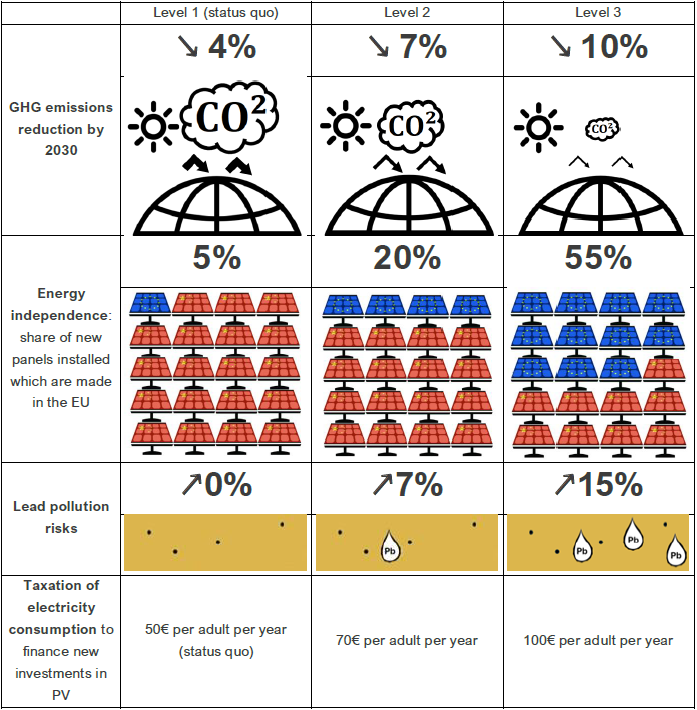
This deliverable summarises a socioeconomic assessment of the potential deployment of perovskite-based tandem PV modules. Using a choice-experiment method based on a survey completed by representative samples of approximately 260 people in France and Germany, this study assesses citizens’ willingness to pay for key expected impacts of the new technology: reduced CO₂ emissions, energy independence, and lead pollution risks. Results show strong public support for investment in the new PV technology, driven mainly by high willingness to avoid CO₂ emissions and lead pollution. Energy independence and price effects have smaller influence. Differences between countries are limited; respondents with higher environmental concern or socioeconomic status, and living in more populated areas, show greater preference for the new technology. Overall, this study highlights a general acceptance of the technology, provided that lead-related risks are properly mitigated.
Presentation of the selected attributes and their respective levels
Developed by
Receive the latest news
Subscribe To Our Newsletter
Get PV industry insights and stay informed about PEPPERONI’s progress.