
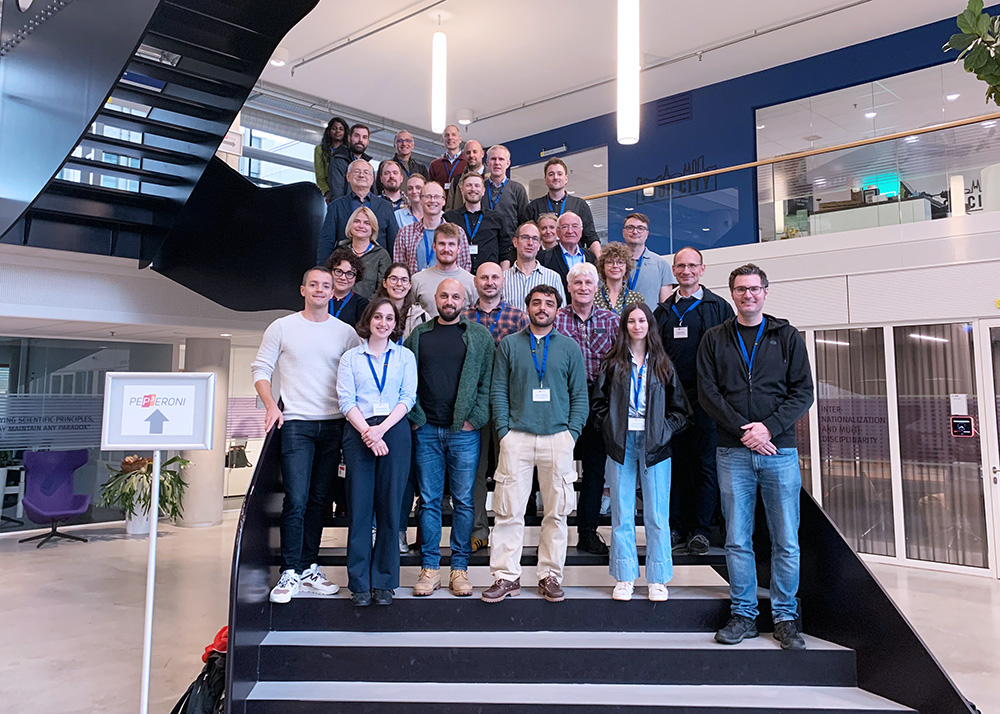
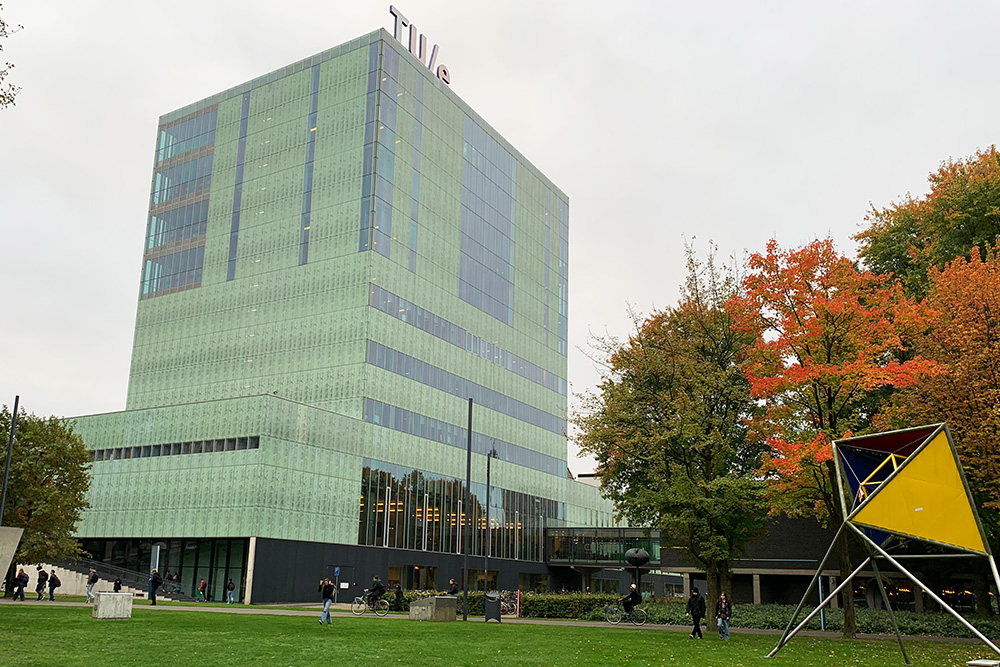
On 7-8 October 2025, partners of the PEPPERONI project gathered in Eindhoven, the Netherlands, for a two-day General Assembly hosted by Eindhoven University of Technology (TU/e). The meeting brought together over 30 participants from across Europe, providing again an excellent opportunity to share progress, exchange ideas and discuss the key actions in the last year of the project that will end in October 2026.
The event opened with an update on the overall project status and ongoing coordination and administration activities from project coordination team (WP1), followed by a session dedicated to communication, dissemination and exploitation (WP9) led by accelopment. These discussions set the scene for a series of dynamic poster sessions, which served as a focal point of the meeting.
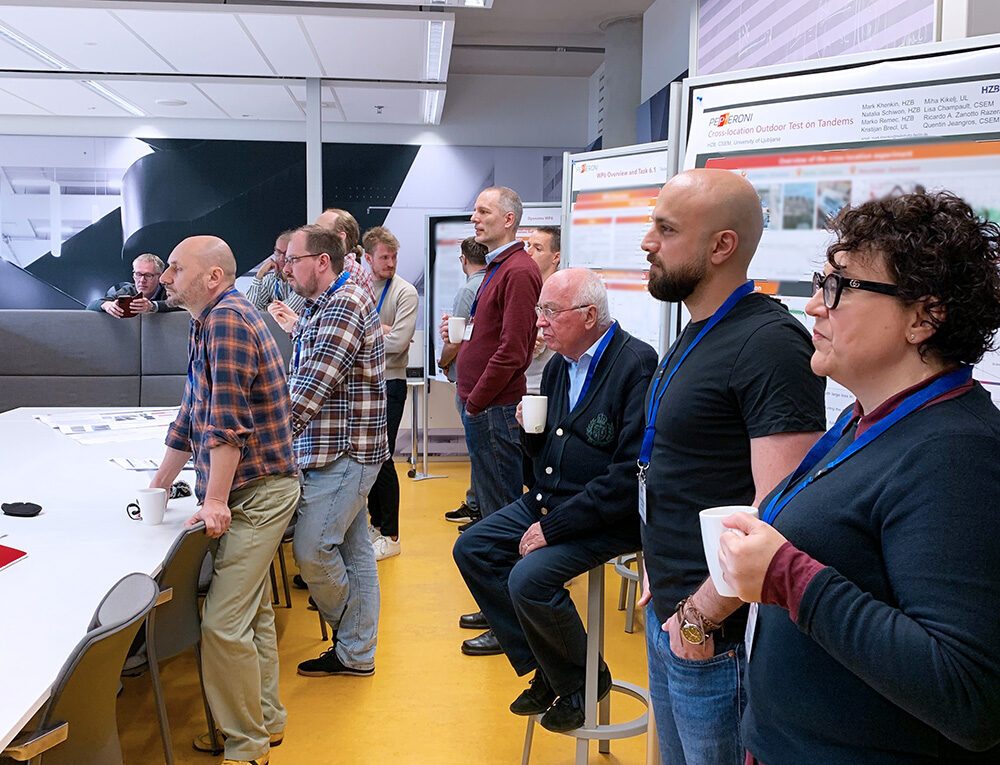
During the first day, participants engaged in poster sessions highlighting the latest developments at the materials, cell, module and pilot line levels. These sessions showcased progress across multiple work packages and enabled detailed technical discussions among the partners.
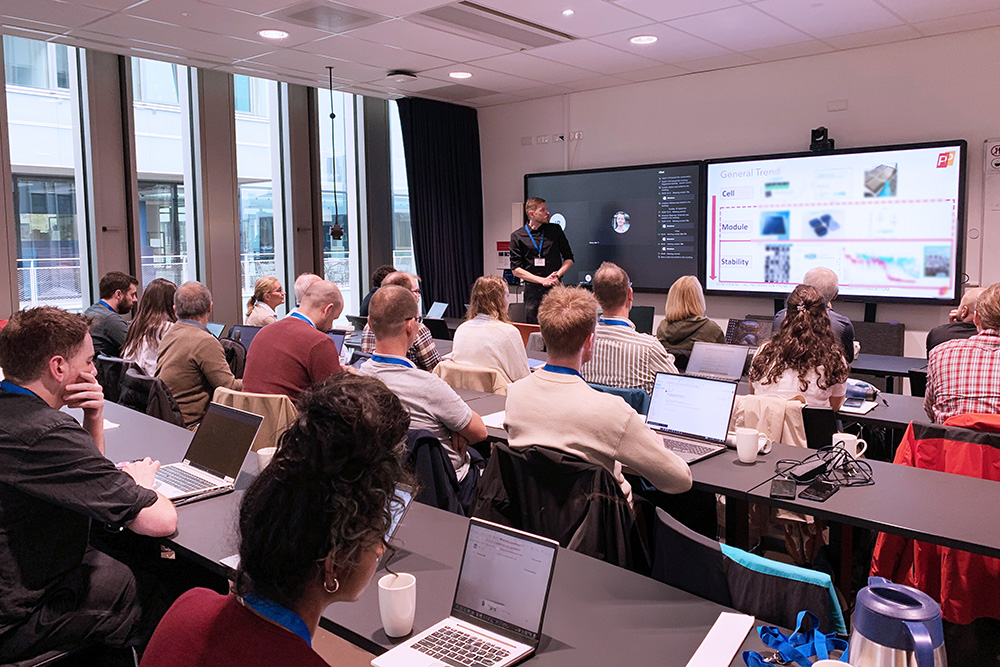
- Tandem cell process integration (WP3): CSEM presented a poster on High-throughput screening of inks for efficiency and stability, jointly with WP7, focusing on methods to accelerate the optimisation of perovskite inks for improved performance and durability.
- Improvement and scalability of materials (WP6): Dyneamo shared progress on Upscaling of SAM molecules and perovskite precursors, addressing critical challenges in moving from lab to pilot-scale production, while KTU presented work on Charge transporting materials, exploring improved materials for efficient charge extraction and stability in tandem architectures.
- Module integration (WP4) and Reliability (WP7): Several joint posters demonstrated collaboration between research and industrial partners. Highlights included Encapsulation, Interconnection and Metallization (HZB), ECA Interconnection & Si-Perovskite tandem cell reliability (CSEM), Encapsulation and testing (PCCL), and Cross-location Outdoor Testing on Tandems (HZB). Together, these contributions showcased efforts to ensure reliable module performance under real-world conditions.
- Tandem solar cell and module pilot line (WP2): Qcells presented two complementary posters titled Tandem Solar Cell and Module Pilot Line, focusing respectively on cell and module development. These contributions emphasised the industrial scaling and process integration of perovskite–silicon tandem technologies.
- Manufacturing tools for pilot production (WP5): Partners introduced several innovations supporting the project’s pilot line infrastructure, including Interconnection tool upgrades (MASS), Physical vapour deposition equipment (Von Ardenne), Wet coating equipment (FOM Technologies), and Lamination equipment (Teknisolar). These tools form a critical part of the manufacturing ecosystem being established within PEPPERONI.
- Sustainability and Life Cycle Assessment (WP8): ULiege presented a poster on Environmental impacts of perovskite/silicon tandem modules, illustrating the consortium’s efforts to evaluate and reduce the environmental footprint of emerging PV technologies.
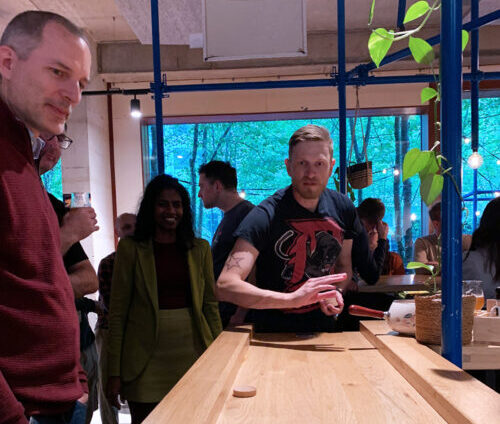
These interactive sessions allowed partners to exchange technical insights, strengthen cross-work package links, and discuss synergies between material development, module integration, pilot line implementation, and sustainability analysis.

The second day centred on drawing conclusions from the poster sessions, with each work package leader summarising key outcomes and next steps. The meeting concluded with a dedicated WP8 workshop focused on materials criticality assessment—a crucial topic for ensuring the sustainability and scalability of emerging PV technologies. Participants explored methodologies for evaluating material criticality and provided expert input on future PV market scenarios, perovskite deployment trajectories, and material use intensity.
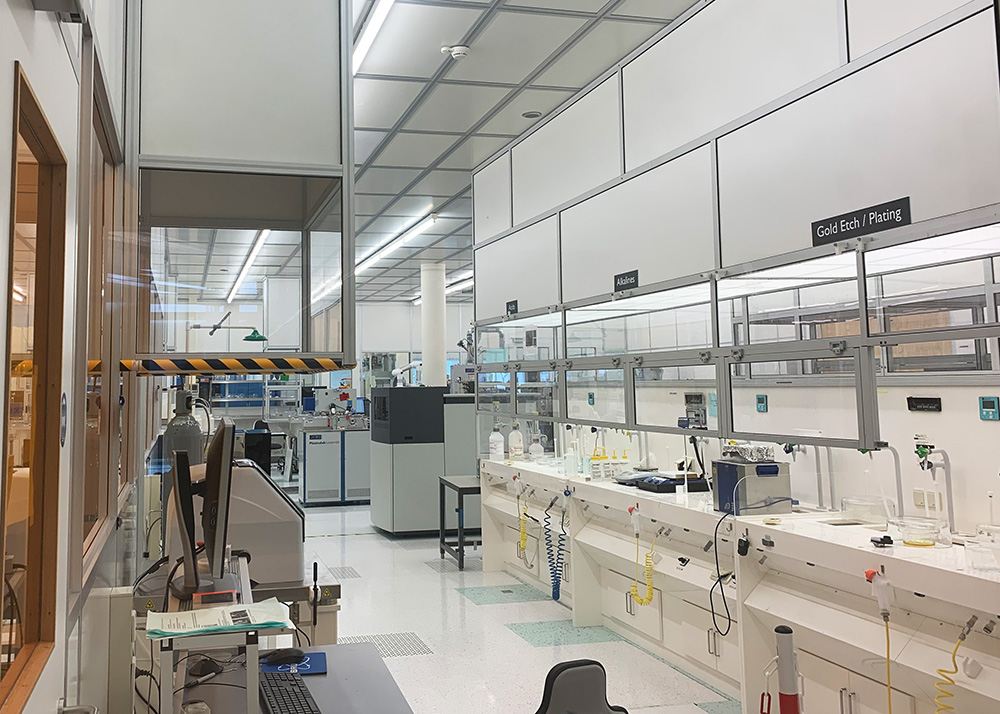
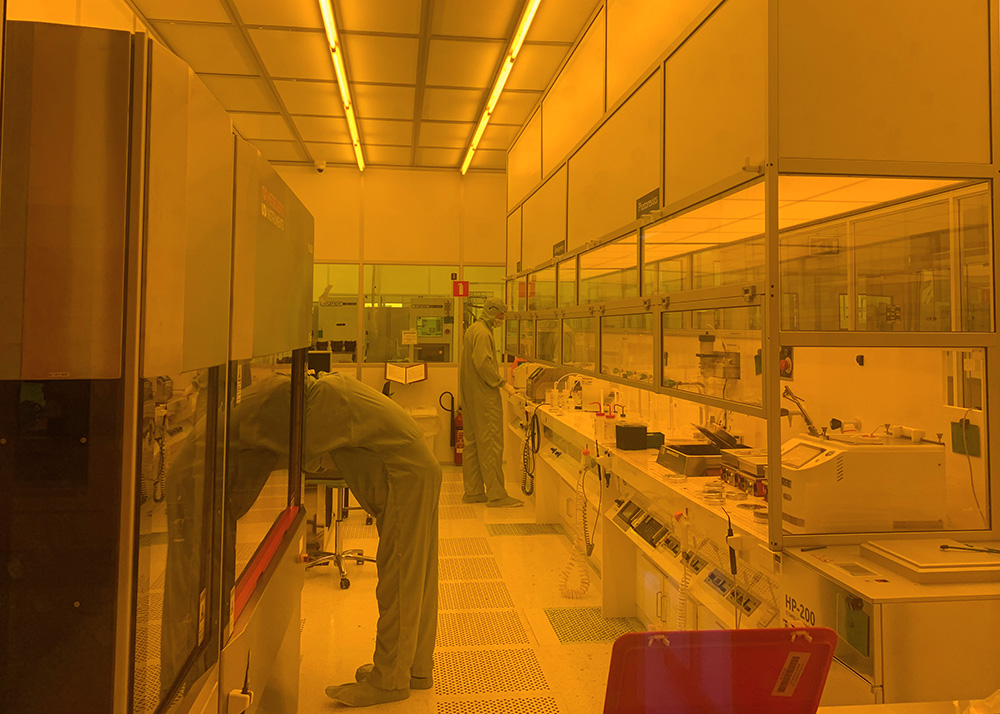
As part of the event, participants also enjoyed a guided tour of the Plasma & Materials Processing laboratories at TU/e’s Department of Applied Physics. The visit offered a first-hand look at state-of-the-art facilities and equipment for atomic layer deposition (ALD) and spatial ALD. Within PEPPERONI, TU/e plays a key role in exploring and developing ALD-based electron and hole transport layers for the perovskite top cell, while also investigating crucial processing aspects and material properties when comparing batch and spatial ALD methods. The lab tour provided valuable context for these efforts and highlighted TU/e’s contribution to advancing the project’s technological foundations.
The Eindhoven meeting reaffirmed the PEPPERONI consortium’s commitment to advancing industrial-scale production of perovskite/silicon tandem solar cells through close collaboration and shared expertise. Partners left the General Assembly with renewed momentum and a clear roadmap for the final phase of the project.